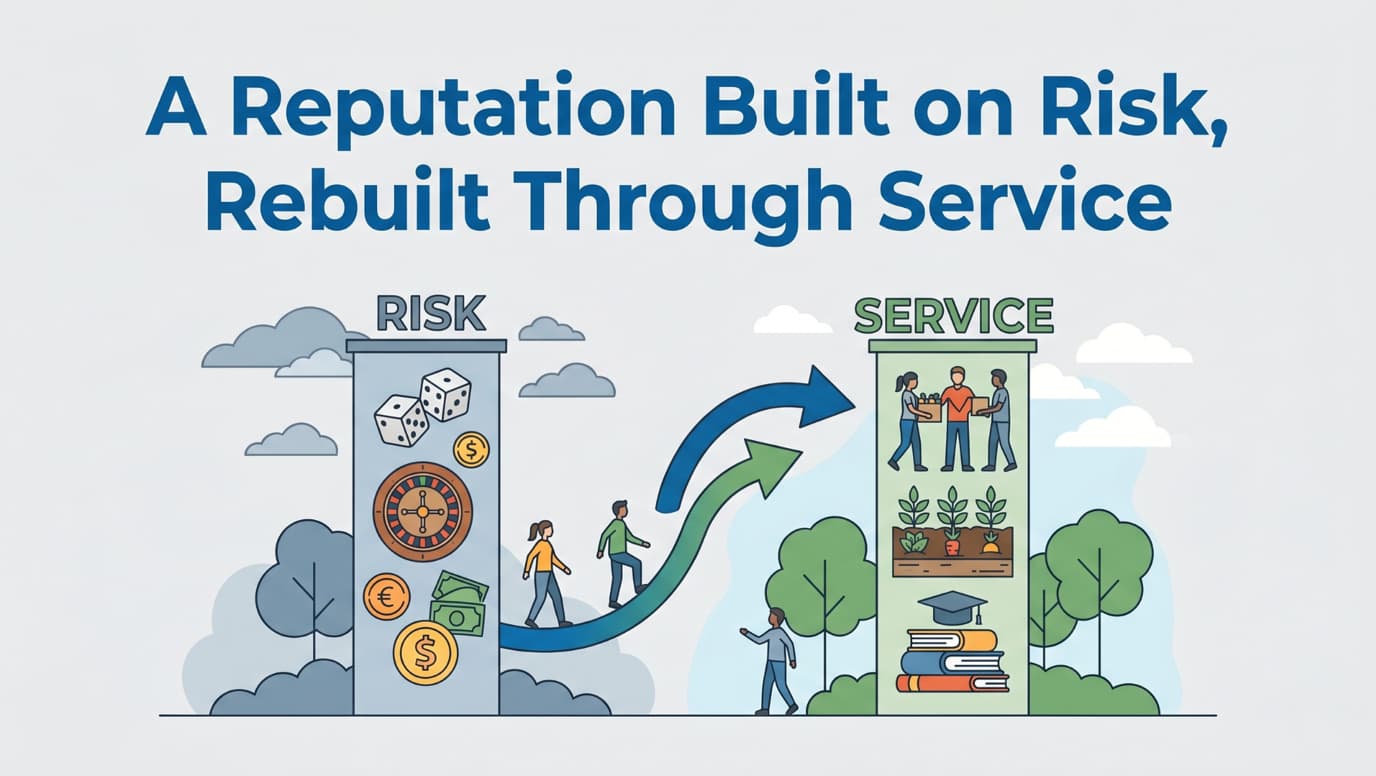
A Reputation Built on Risk, Rebuilt Through Service
Not many industries have as much reputational weight as gambling. Several decades of regulatory examination, addiction issues, and political discourse have placed operators in a position to seek methods to make the public view them in a softer light. There is a limit to traditional advertising, billboards and slogans cannot answer the more profound question of whether a company is adding anything to profit.
This is the reason why community service has ceased to be a peripheral project to become a core component of casino operator communication. Volunteering has something the paid media cannot provide: visible action, third-party validation, and stories that the local press will report on their own terms.
From Profit Margins to Public Good: The Strategic Shift
Corporate social responsibility has not been in the gambling industry as long as it has been in the banking or energy industry, but it has been rapidly catching up. Operators are now publishing annual community reports, employee volunteering lists, and education sponsorship lists in addition to their financial disclosures.
Across India and the wider IN market, Pinky bet casino at PinkyBet online — which guide users through registration, sign in, and a streamlined login directly from the official website — treat their community programs as part of a broader trust-building effort. These operators increasingly frame volunteering and educational sponsorships as core to their public identity rather than an afterthought.
Why Volunteering Became the Preferred Tool
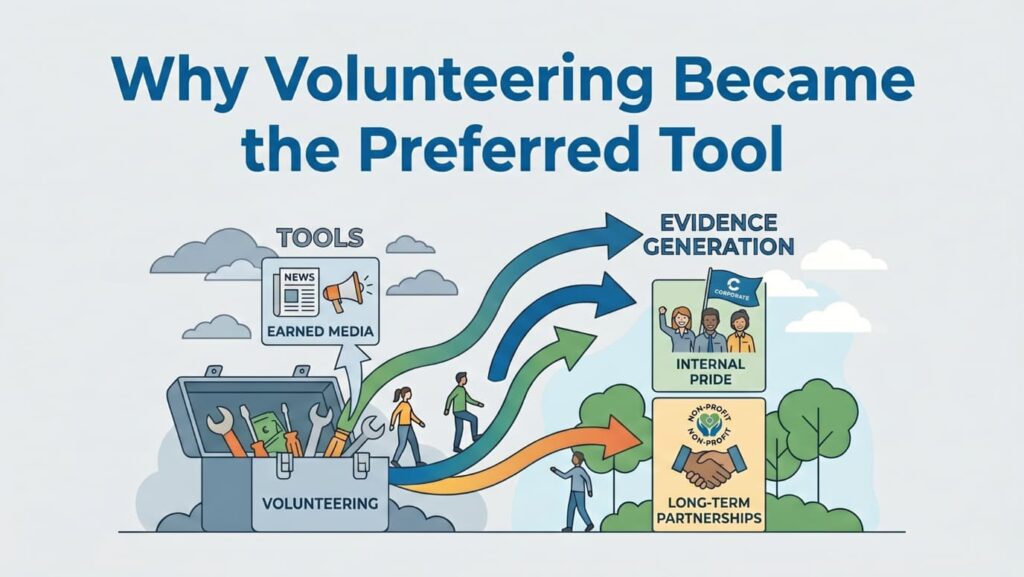
Volunteering works where slogans fail since it yields evidence. A three-year tutoring program leaves teachers, students and quantifiable results. Impressions are left behind by a media campaign.
Researchers studying corporate philanthropy point to three reasons volunteering outperforms other reputation tools:
- It generates earned media instead of paid media.
- It involves employees directly, which builds internal pride and external authenticity.
- It produces long-term partnerships with nonprofits, which act as credibility partners.
Education as the Most Common Cause
Education is by far the leading cause that operators support. The argument is pragmatic. Education is uncontroversial, politically safe, photogenic, and aligns with the responsible gaming language regulators already expect.
A scholarship given to a first-generation college student is cross-cultural and inter-linguistic. A primary school child reading program is less criticizable than a generic donation to an unknown charity.
Scholarships, Coding Bootcamps, and Adult Literacy Drives
Programs funded by operators tend to be based on familiar templates. There are those who sponsor scholarships in local universities. Other people finance coding bootcamps of unemployed adults or literacy campaigns in underserved districts.
According to Points of Light, which tracks corporate volunteering and civic engagement at scale, companies that pair financial giving with employee volunteer hours see stronger community outcomes than those who write checks alone. That research has shaped how gambling operators design their education programs, with most now requiring staff participation rather than treating donations as the entire contribution.
Common program formats include:
- Multi-year university scholarship endowments tied to local communities.
- After-school tutoring run by employee volunteer teams.
- Adult education funding for vocational and digital skills.
- School infrastructure grants — libraries, computer labs, and sports facilities.
Employee Volunteering Programs Inside Casino Operators
In addition to external sponsorship, most operators have developed internal volunteering systems. A typical characteristic is paid volunteer leave, which usually provides employees with one to five days annually to do approved community work.
Other companies will match the donations of employees dollar to dollar. Others have team volunteer days where whole departments tutor, paint schools, or do food drives. These programs are two-fold: on the one hand, they are a real contribution to the community, and on the other hand, they are employee retention and recruitment.
Regional Patterns: How Asia-Pacific Operators Approach Community Work
The Asia-Pacific gambling sector has expanded faster than its European counterpart, and community programs in the region have followed a distinct path. Operators face younger populations, mixed regulatory frameworks, and audiences who place a strong cultural value on family and education.
India and the Philippines as Reference Markets
Both markets demonstrate the way in which operators adapt volunteer stories to local demands. Giving in education is also in the limelight and this is accompanied by employee programs that focus on visible, practical involvement.
A parallel pattern appears across the PH market, where GX Bet online casino — promoting registration, sign in, and a clear login to GXBet flow through its official website tailored to the Philippines — treats these touchpoints as part of a transparent user experience. The brand has positioned itself as one of several regional platforms tying everyday product communication to community contribution stories.
Does It Actually Change Public Perception?
The studies on the effectiveness of CSR provide inconclusive results. Surveys of reputation always show that consumers reward visible community work, but only when it seems to be long-term and not part of crisis response.
Programs initiated following a scandal seldom shift the opinion. Programs that have been quietly running over the years and only discovered by journalists or independent researchers are much more likely to be credible.
Three patterns stand out in the academic literature on industry reputation:
- Consistency matters more than scale — small steady programs outperform large one-time gestures.
- Employee involvement raises trust scores faster than executive announcements.
- Independent verification by nonprofits and journalists carries more weight than self-reported figures.
A Sector Still Earning Its Place at the Volunteer Table
Volunteering will not eliminate the social issues that gambling creates in the minds of the people regarding addiction, financial loss, or regulatory loopholes. It can however provide operators with a valid space in community discourse that they were formerly excluded.
The candid conclusion is that volunteering is needed but not enough. Regardless of the number of schools an operator assists in funding, critics will still question motives and regulators will still examine practices. But to the companies who are playing the long game, community service can provide what paid advertising cannot, a history of actual action, authored by the individuals who were the beneficiaries of the action.